

2P, 3P or 4P? How to Pick Your RIIFT Power Module (and the Right Board to Put It In)

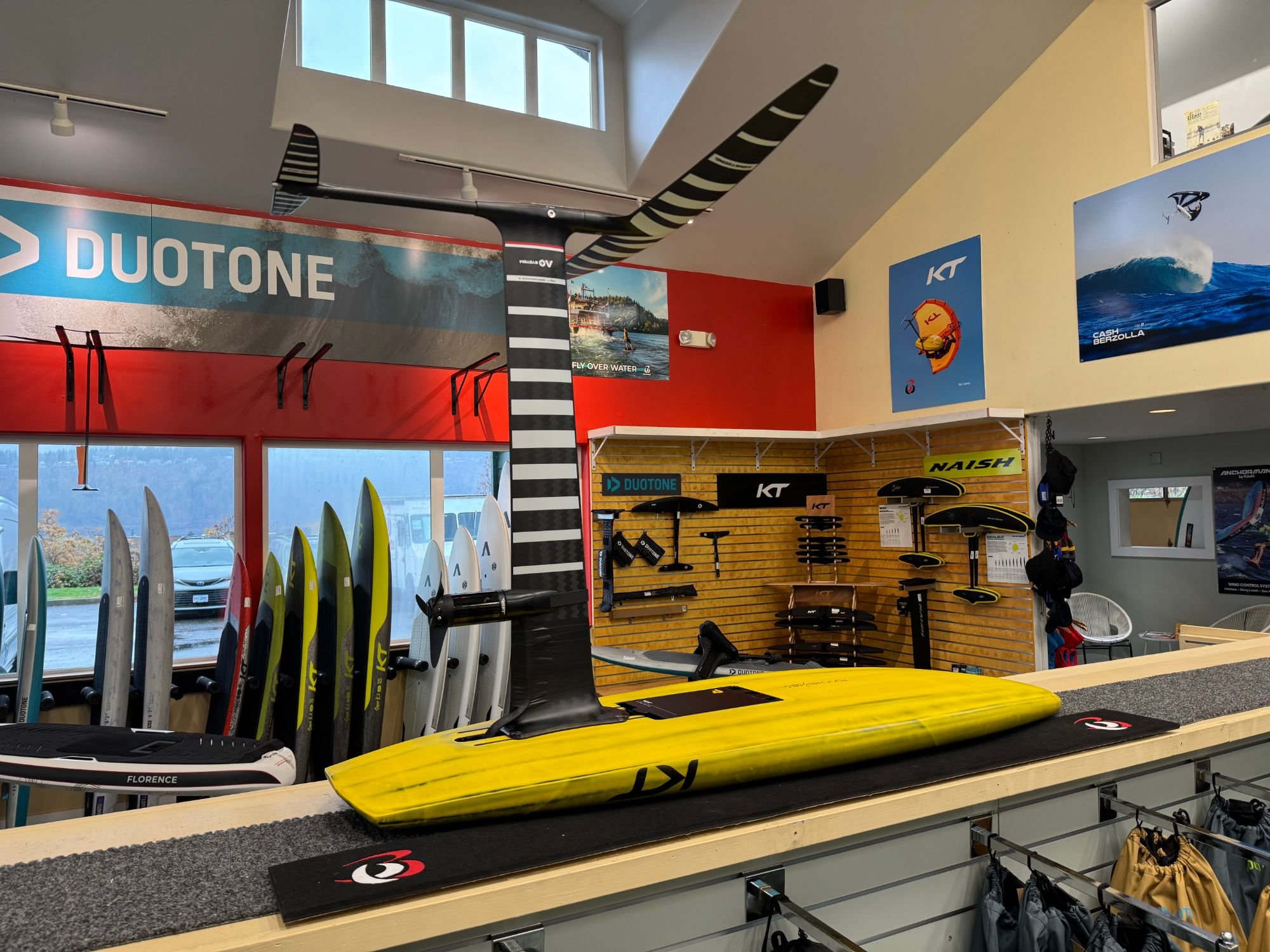
The RIIFT 2P on a custom KT Performance 37L, taped to an Armstrong Performance X 795 mast with the UHA 870 front wing and Speed 180 tail. Photo: T.J. Gulizia.
By T.J. Gulizia
RIIFT is here! Pre-orders open today, November 20th, and the first US systems land at Big Winds in mid-January 2027.
If you haven’t seen it yet, RIIFT is a foil assist with the battery built into the board instead of strapped to the mast. The propulsion pod rides on your mast, the Power Module slides into a box in your board, and that’s it: no battery hanging under you, no cable on the deck, and a board that still pumps and turns like a foil board should.
The question we’re hearing most at the shop: which Power Module do I get, 2P, 3P or 4P, and what size board should it go in? I’ve been riding the 2P on a tiny custom board, our crew has been taking turns on it, and we’ve read every bit of early feedback out there. Here’s how we’d choose.
The Three Power Modules at a Glance
| 2P | 3P | 4P | |
|---|---|---|---|
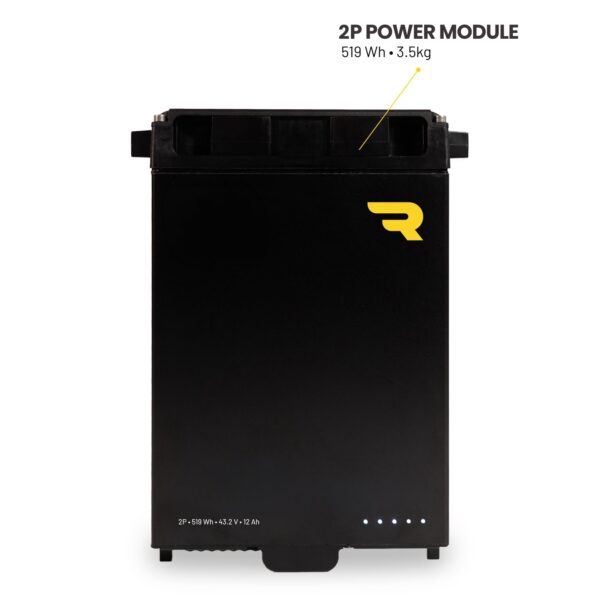
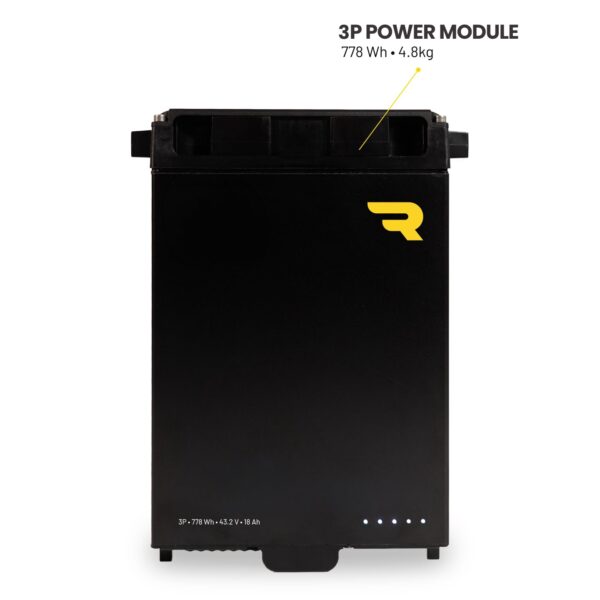
| Capacity | 519 Wh | 778 Wh | 1037 Wh |
| Module weight | 3.5 kg (7.7 lbs) | 4.8 kg (10.6 lbs) | 5.9 kg (13 lbs) |
| Continuous motor time* | about 36 min | about 54 min | about 72 min |
| Charge to 80% (10A charger) | about 58 min | about 86 min | about 115 min |
| Thrust | 30 kg static | 30 kg static | 30 kg static |
| PowerPack (complete system) | $4999 | $5999 | $6999 |
| Power Module only (2nd battery) | $2999 | $3999 | $4999 |
*RIIFT’s numbers: an 80 kg (176 lb) advanced rider, flat water, 800 cm² high-aspect foil, one continuous run. Nobody rides like that. You’ll use the motor in bursts to get up and to link bumps, so your session lasts far longer than the motor time.
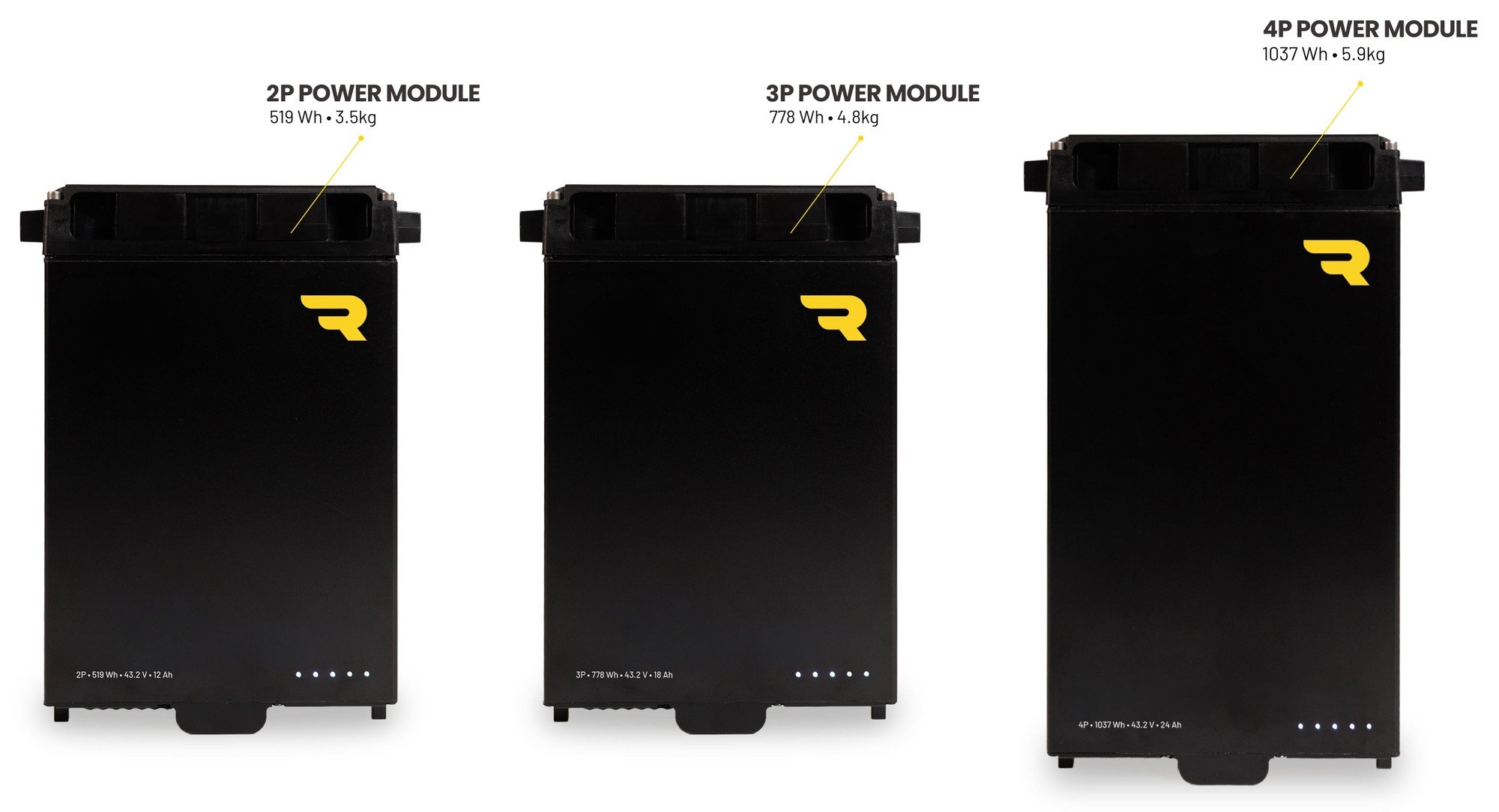
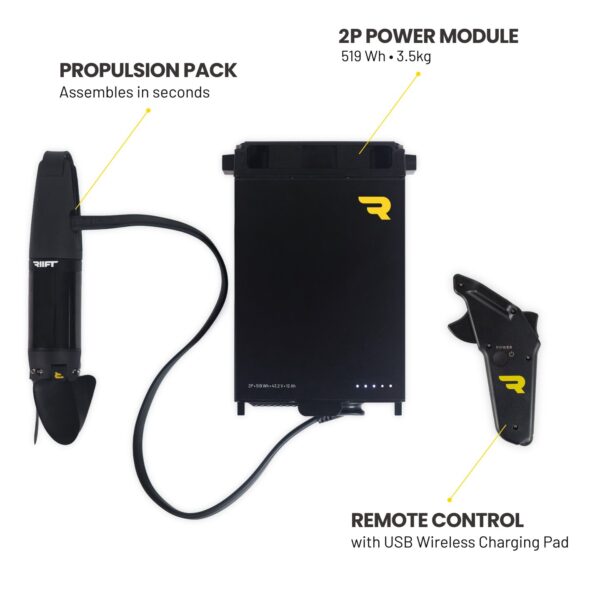
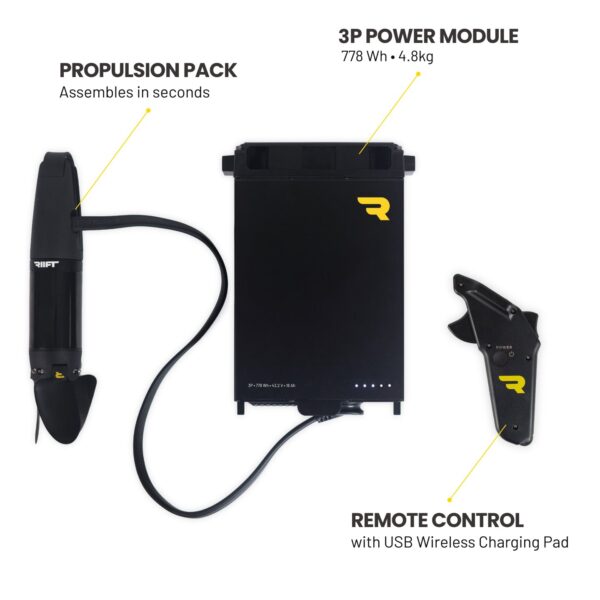
The 2P, 3P and 4P Power Modules. The 2P and 3P share the same footprint (the 2P is thinner), while the 4P is thicker and longer. Image: RIIFT.
Same Power, Different Gas Tank
Here’s the part that surprises people: all three modules push the same 30 kg of thrust through the same 2500 W motor. The 4P doesn’t get you up any faster than the 2P. What changes is how long you can keep doing it, and how much weight you carry in the board.
So the real question isn’t “how much power do I need?” It’s “how long are my sessions, how often do I hit the throttle, and how much weight do I want under my feet?”
A Second Opinion: Hydro Gav’s Numbers
On battery life, Hydro Gav is comfortably getting around 50 minutes on the 2P with a 35L board and a 700 to 800 cm² front wing, linking waves instead of running the motor nonstop. Step up to the 3P with the same gear, and he’s regularly getting 90 minutes. He also managed over an hour of continuous powered riding on the 3P, and a single module swap could realistically mean three hours on the water.
Where RIIFT really stood out for him was pumping. Because the battery sits in the board, the mast and foil go directly beneath that weight, and when you’re pumping, turning or linking bumps, the extra mass almost seems to disappear. His one knock: each Power Module carries the battery and the electronics together, so adding a second battery costs more than with some systems. Factor that into your budget.
What’s in the Box
First impressions count, and RIIFT nailed this one. Your PowerPack arrives in a hard case that doubles as the shipping box, with a foam cutout for every piece: the Power Module and 10A charger, the propulsion pod with its 2500 W motor and three props, the remote with a floating wrist leash (plus a special edition Kaohi leash), a wireless charging pad, hex and Torx tools, dielectric grease and a neoprene prop guard. Everything has a home, and the case makes it easy to haul to the beach or pack for a trip.
Hydro Gav called the presentation exceptional in his RIIFT review: a rock-solid protective case, a neatly organized layout with bespoke tools and hardware, and an ownership experience that makes it easy to forget how young the brand is. In his words, “you’d be forgiven for thinking this was a product of a major manufacturer.” He also found setup refreshingly simple, with just four main parts (remote, battery, cable and pod), and got it from packed away to ready to ride in under five minutes once he’d done it a few times.
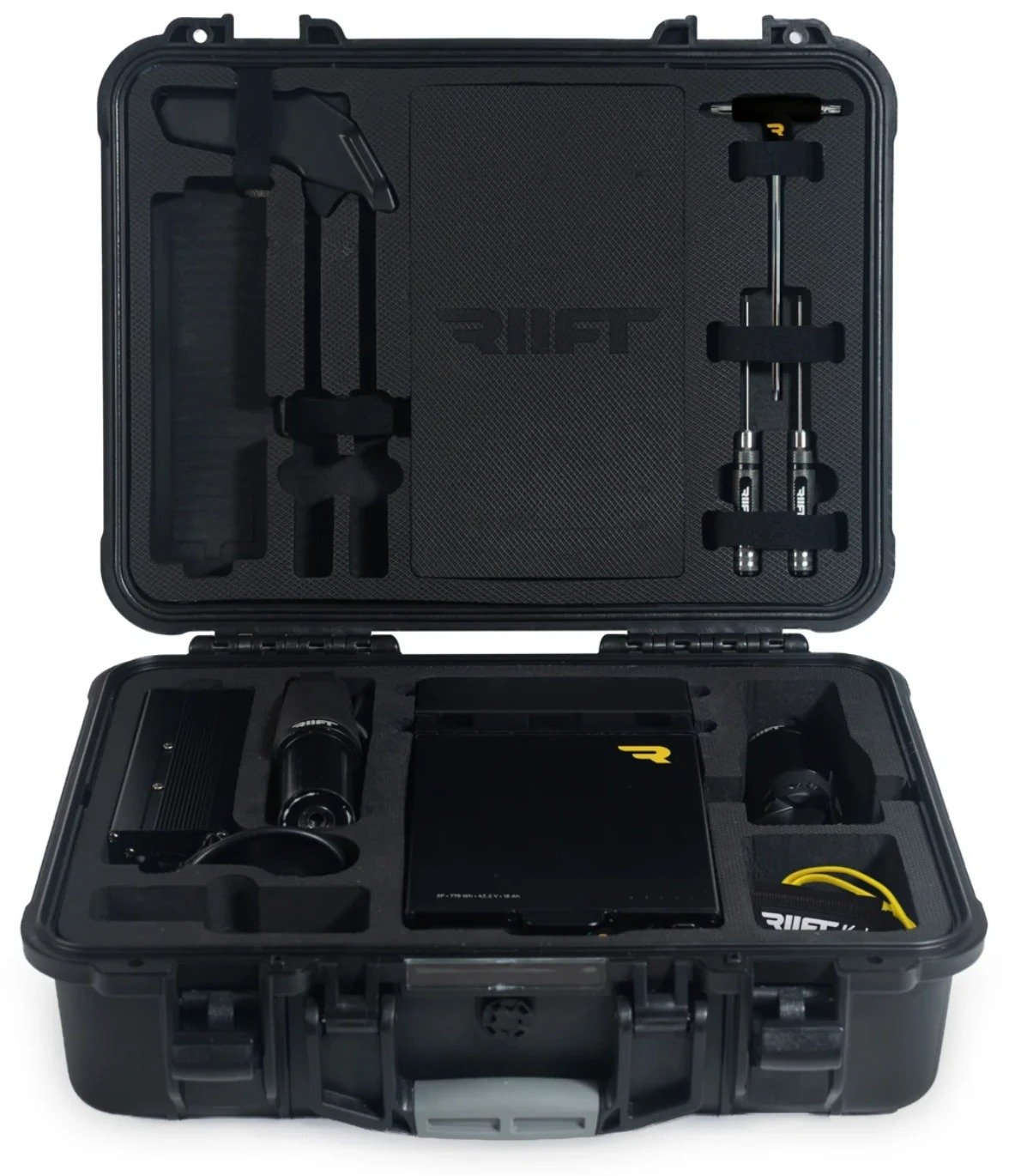
Every RIIFT PowerPack ships in its own hard case, with a spot for every piece. Image: RIIFT.
Which Power Module Is Right for You?
RIIFT 2P: Light, Lively and Made for Riders Who Already Foil
The 2P is the lightest and slimmest setup, and it’s what I ride. It keeps the board feeling closest to a regular prone or wing board, and it fits the thinner 2P-only boards for the most connected feel.
Pick the 2P if you’re a lighter rider, you already pump and foil well (prone, downwind or wing), and you mostly use the motor to get up, then ride on your own. It’s also a great second battery.
So what does a 2P get you in the real world? On one of my fall pump sessions, I logged 3.56 miles of laps in about 38 minutes on the water, topping out at 14.6 mph. That’s roughly the same ride time I get from my LiftX Light battery.
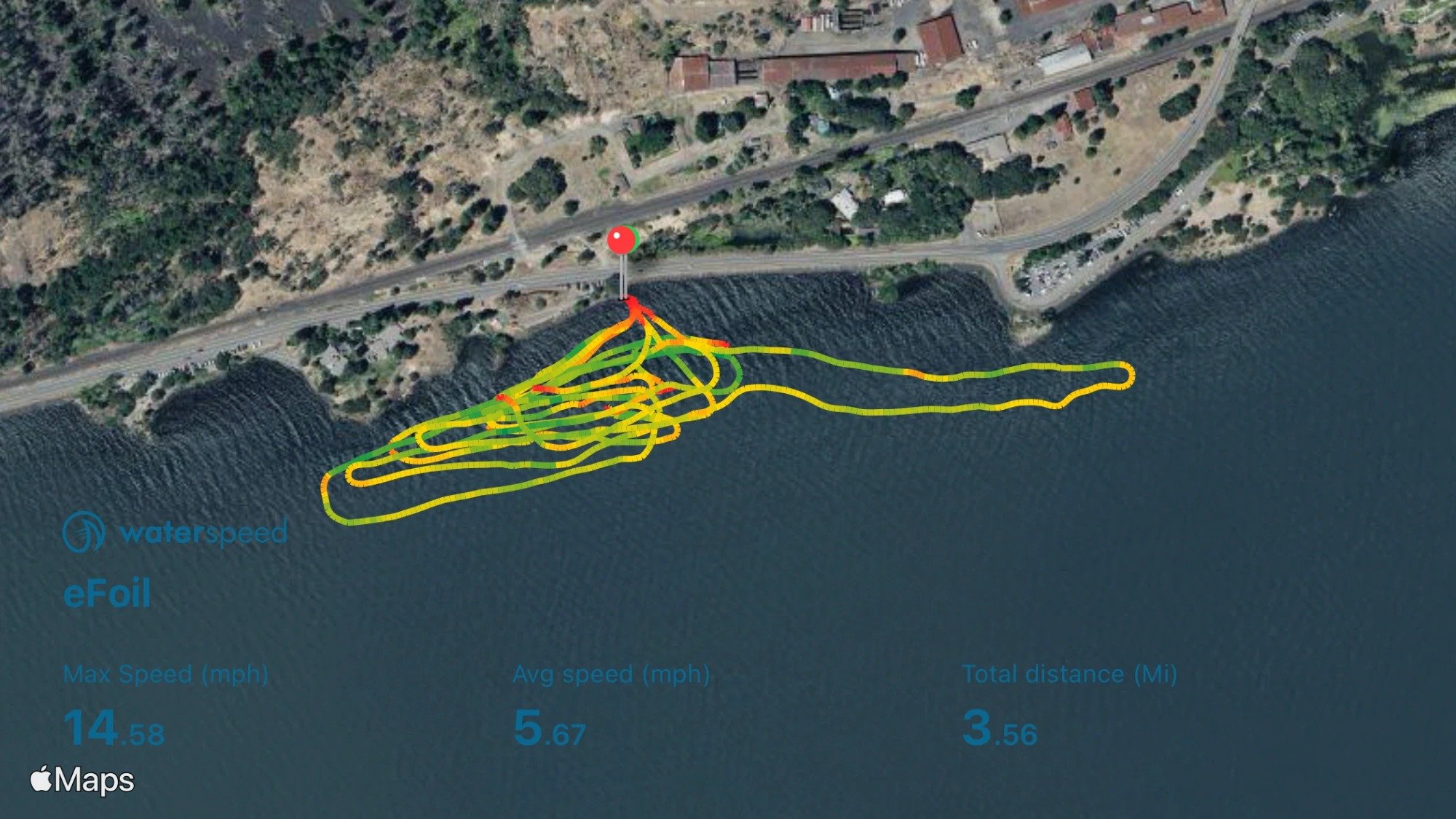
One 2P pump session on Waterspeed: 3.56 miles, 5.67 mph average, 14.58 mph top speed.
I’ve been using it all fall to dial in my pump on two setups, the Armstrong UHA and the KT Solus, and it’s been a great way to test foils. The propulsion pack straps onto just about any mast in seconds, and I tape it up with electrical tape in a few minutes.
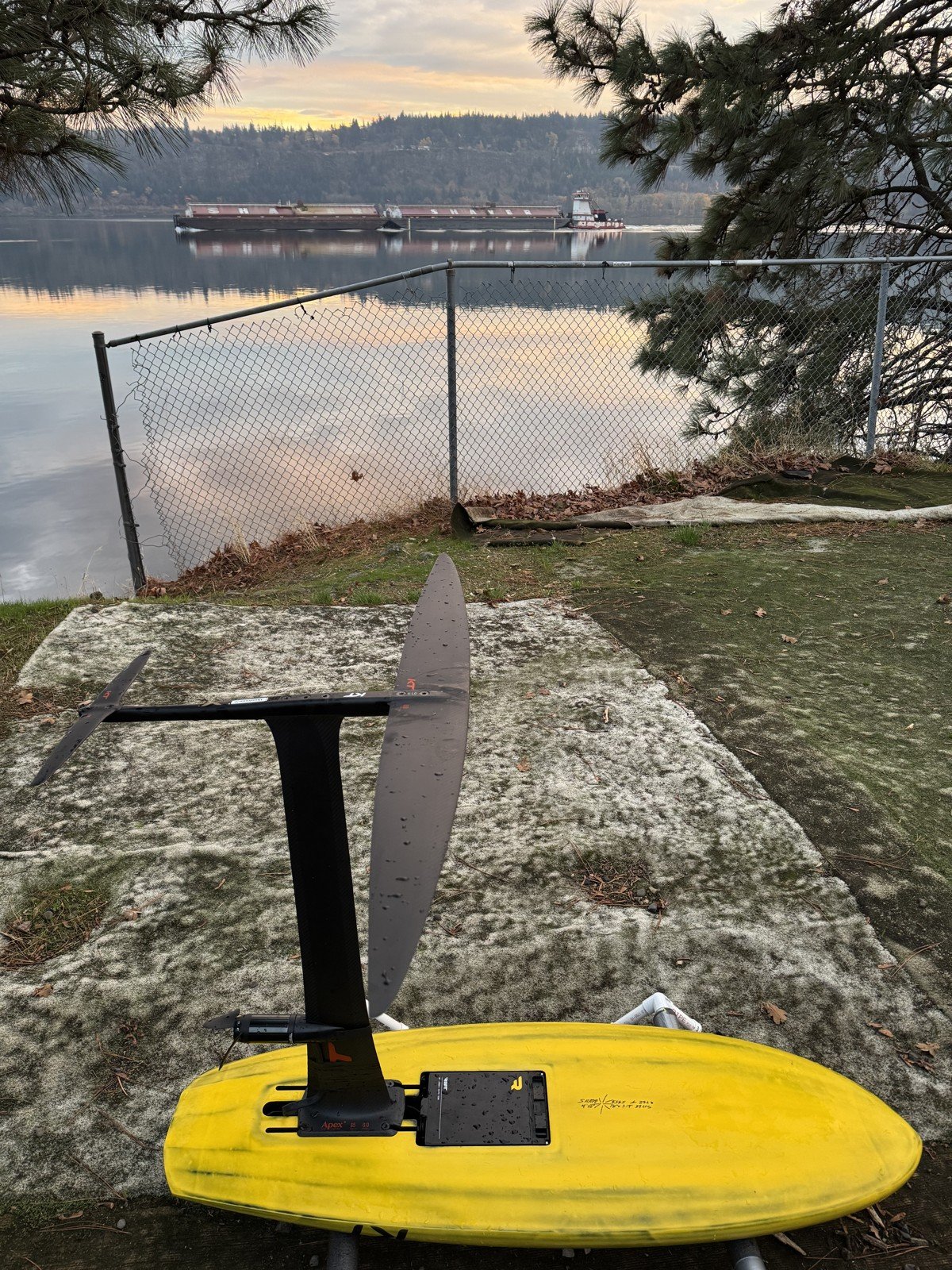
The RIIFT propulsion pack strapped to a KT Apex 85cm mast, with a KT Solus 1100 front wing and Pulse 135 tail on the 56 fuselage. Board: a custom KT Performance, 4’10” x 18″ x 3.14″ | 37L. Photo: T.J. Gulizia.
RIIFT 3P: The Sweet Spot for Most Riders
RIIFT calls the 3P its go-to module, and we agree. It adds about 18 minutes of motor time over the 2P for under 3 extra pounds. That’s the margin that lets you relax on a downwinder, restart after a fall without watching the battery, or ride with a buddy without cutting your session short.
Pick the 3P if you’re an average-weight rider, you’re still dialing in your pump, or you want one battery that handles everything from a dawn patrol to a full Viento to Hood River run.
RIIFT 4P: Maximum Range
The 4P is for heavier riders, long flat-water sessions, bigger boards and anyone using RIIFT as a tow or jet ski alternative. It carries the most weight, but because it sits in the board instead of under it, it can still be pumped.
Pick the 4P if you’re a bigger rider, you ride a larger board, you want to go long on flat days, or you’re sharing one system among the family.
Our Two-Battery Tip
If you go with the 2P, plan on two. I already run two batteries with my LiftX Light, and I’ll likely treat the 2P the same way. A spare 2P Power Module is $2999, and swapping modules at the beach doubles your session. A 3P box board takes all three sizes, so a 3P PowerPack plus a spare 2P is a great combo too.
Pick Your Board’s Box First
Before you choose a module, know what box your board has. RIIFT-enabled boards come in two box styles, and they’re not interchangeable:
- 2P box (thin): fits the 2P only. The thinnest, lightest board with the most connected feel.
- 3P/4P box (thick): fits the 3P and 4P, and the 2P too with the spacer that comes with every 2P. A little more board underfoot, but you can run any module.
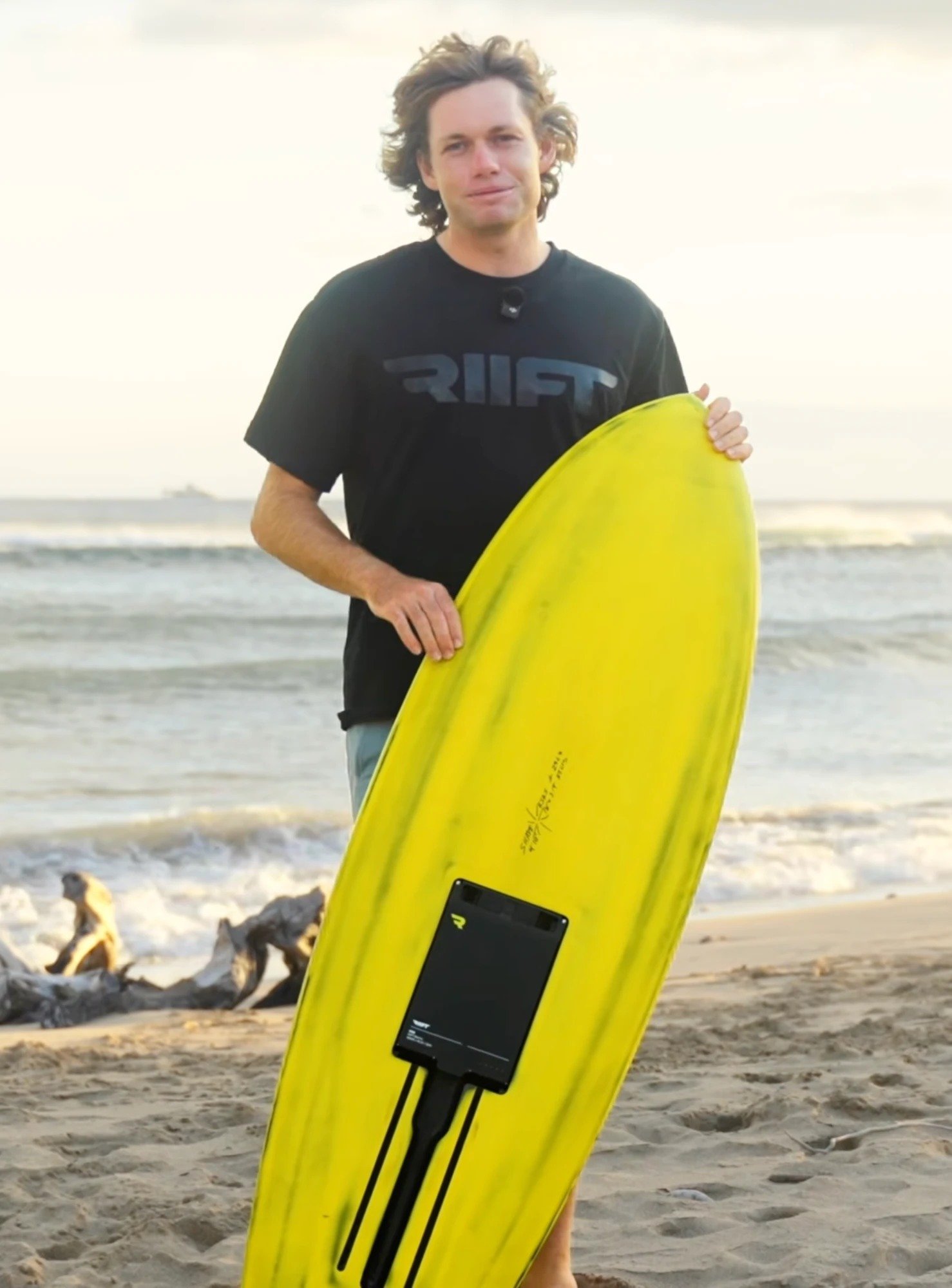
Kane De Wilde with a KT RIIFT board, the Power Module clicked into the Tracks. Image: RIIFT.
This one comes down to personal preference. The 2P box lets a shaper build an ultra-thin, ultra-light board, and that’s a big advantage if you want the most connected feel.
On the other hand, RIIFT lets you drop a Blank plug into the box, so a thicker 60L+ board can be a two-in-one: electric when you want the motor, analog when you don’t. A one-board solution sounds pretty nice, and it’s something Lift can’t offer and a trench board won’t allow.
RIIFT’s launch Tracks (the box your board builder installs) fit all three modules.
How Big a Board?
Here’s the beauty of an assist: the motor gets you up, so you don’t need the volume to paddle or float like you would on a SUP foil or a wing board. Most riders can go smaller than they think, but don’t go so small that you can’t get to your feet.
- Experienced prone, downwind or wing riders: around your body weight in kg minus 30 to 40 liters. The custom KT Performance I’ve been riding is 4’10” x 18″ x 3.14″ | 37L.
- Intermediate riders new to assist: a midlength in the 50L to 65L range gives you a stable platform to pop up and learn the throttle.
- Newer foilers, heavier riders and anyone popping up from the knees: 65L and up, like the 5’8″ x 26″ | 70L KT Entry Level.
Want the board I’ve been riding? The KT Performance RIIFT board is available now as a custom order, with production models coming in spring 2027. Give us a call at 541-386-6086 or come by the shop to order one.
Weight matters, too. The 4P adds about 5 lbs over the 2P, so if you’re on a small board, the 2P or 3P keeps it lively.
Don’t let a small board scare you off, either. I took the custom KT Performance 37L out with Eddy, and he figured it out in a matter of minutes once he found that speed was his friend. He practiced on flat water, going from his chest to his knees, then from his chest straight to his feet. (Results may vary: there was a splash or two!)

Flying high on the RIIFT 2P and the custom KT Performance 37L, with the pod tucked under the board. Photo: Eddy P.
Getting Started: A Few Tips From Our Sessions
- Get used to a feathered throttle. I’ve become so used to the stepped power levels on Lift, Foil Drive and Duotone that RIIFT’s feathered throttle took me a minute to adjust. After a couple of sessions, I appreciated how simple the remote is, and feathering became second nature.
- Use the speed limiter. At 100% I was getting bucked off the back of the board. I found I don’t need more than 75% on bigger foils, or 80% on smaller ones. To set it, choose SP-LMT in the remote’s menu (20 to 99), long-press back to the home screen, then double-click the power button. The header changes from SP-100% to LMT-xx%. Double-click again to go back to full power.
- Mount the motor two fists down. I run the bottom of the motor about two fists (roughly 17 cm) below the board, similar to the Duotone Assist position.
- Let speed be your friend. Get the board moving before you pop up. Practice chest to knees first, then chest to feet.
- Grease your connectors. Every PowerPack comes with dielectric grease. Use it.
- Charge smart. The 10A charger gets the 2P to 80% in about an hour.
What’s Next: A RIIFT eFoil?
One request we keep hearing: a longer-cord “eFoil” option from RIIFT, with the motor down low on the mast like a true eFoil. It may be a little early to call it, but I got to ride one at AWSI: an integrated alloy mast from KT on a bigger, Drifter-style RIIFT board, running the 4P.
Nothing’s official yet, and I’d guess we’ll see it come to fruition later in 2027. But it grabbed my attention in a big way. A small-diameter motor mounted low on the mast could give you a feel very similar to the LiftX at a fraction of the weight. That seems pretty awesome to me!
Wrap-Up
Where RIIFT is bound to shine is downwinding here in the Gorge. Until the wind comes back, pump practice on the 2P has been the cardio and the challenge I need to stay in shape (and entertained) through our shoulder season dry spell.
Pre-order your RIIFT PowerPack or Power Module today at bigwinds.com, or come see us at 207 Front Street, Hood River.
T.J. Gulizia is a co-owner of Big Winds in Hood River, Oregon. Come by 207 Front Street or call 541-386-6086.
Get Yours Here!
RIIFT PowerPack
Foil Assist / Prone / Downwind / Flatwater
EXPECTED TO SHIP MID-JANUARY 2027
Available as 2P, 3P, or 4P, the RIIFT Powerpack comes with everything you need to upgrade your RIIFT-enabled board to the world’s most balanced foil assist.
Not sure which size? Read our 2P vs 3P vs 4P guide →
We Rode It: RIIFT Foil Assist, plus 3 tips for RIIFT newbies →
RIIFT Power Module
Foil Assist / Prone / Downwind / Flatwater
EXPECTED TO SHIP MID-JANUARY 2027
RIIFT’s proprietary Power Module is a self-contained, IP68 waterproof, all-in-one battery for the RIIFT Power System.
Not sure which size? Read our 2P vs 3P vs 4P guide →
We Rode It: RIIFT Foil Assist, plus 3 tips for RIIFT newbies →
