Foil Shimming Made Simple: Base Plate and Tail Shims, Brand by Brand

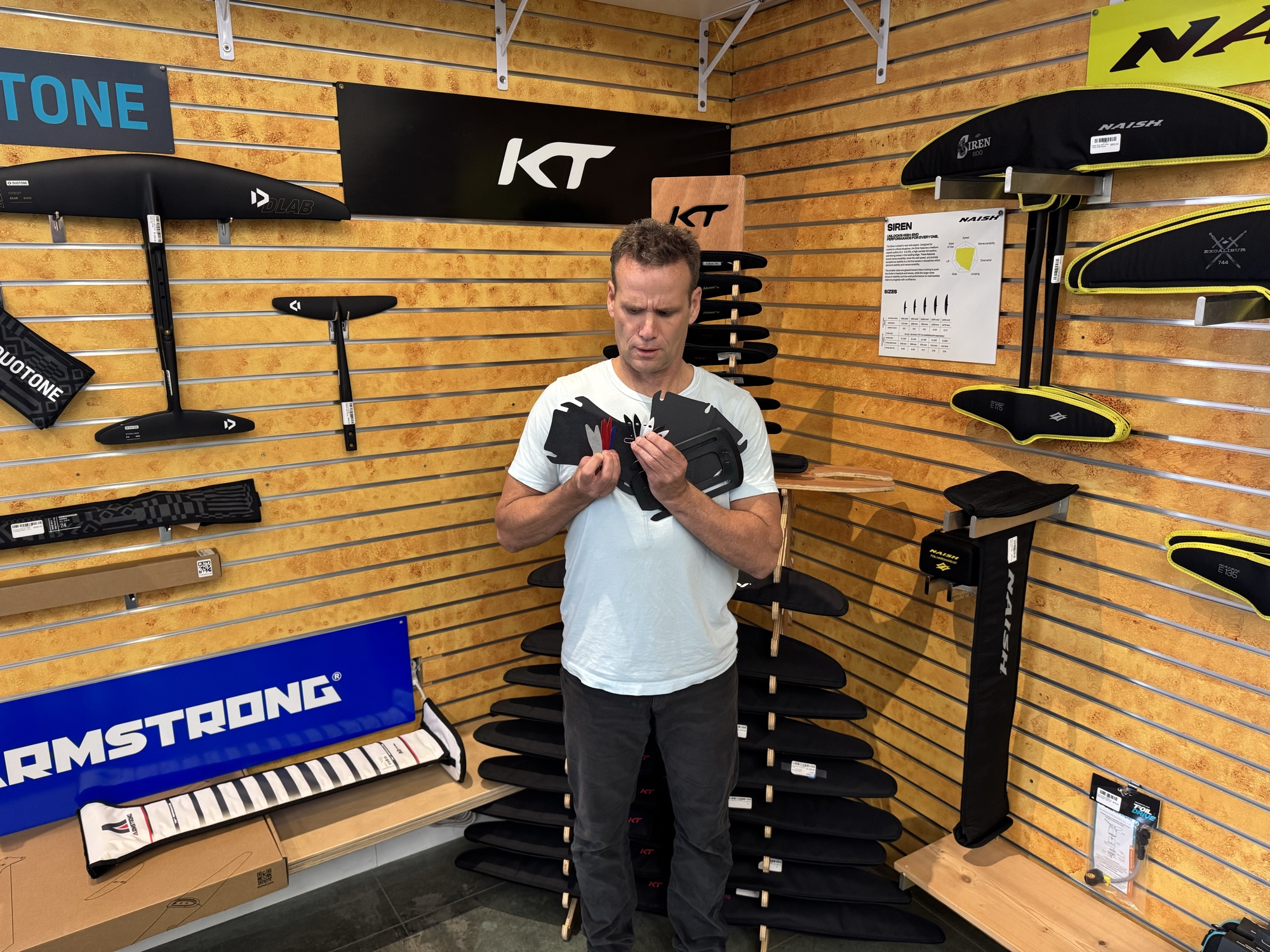
Eddy Patricelli, hands full of shims and one question: which way is plus?
By T.J. Gulizia
It’s one of the most common questions we get, over the phone and across the counter: “Do I need a shim?”
Most of the time, the answer is no. Start with the factory setup. But when your foil feels a little off, a shim the thickness of a credit card can change how it lifts, pumps and glides. Here’s how shimming works, and how Duotone, Armstrong and KT each handle it.
What a Shim Actually Does
A shim is a thin wedge, usually somewhere between 0.3° and 2°. It changes the angle of one part of your foil relative to another. There are two places you can put one:
- Base plate (mast) shim: between your mast plate and the board. It tilts the whole foil relative to the board. Think of it as the coarse adjustment.
- Tail (stabilizer) shim: between the tail wing and the fuselage. It changes the angle of the tail relative to the front wing. Think of it as the fine adjustment.
The tail doesn’t make lift. It pushes down to balance the front wing and keep the foil level in pitch. Change that balance and you change how much front-foot pressure you need, how early the foil lifts, and how fast it wants to go.
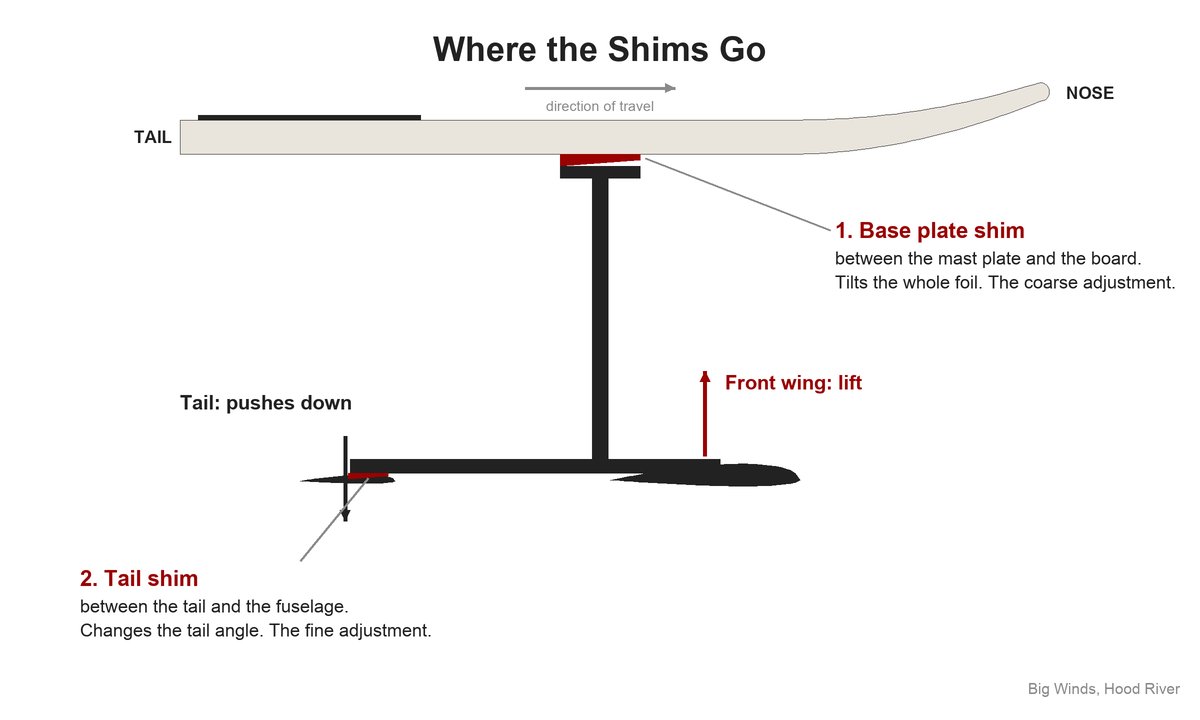
Base Plate Shims: Tilting the Whole Foil
A base plate shim does two things. At takeoff, with your board flat on the water, it changes the front wing’s angle of attack. Once you’re up and the foil is flying level, it changes the angle your board rides at.
Thick end toward the tail: more lift, earlier takeoff
At takeoff: the front wing sits at a slightly higher angle, so it lifts sooner and at slower speeds. Use it when the tail is bogging or the foil isn’t lifting enough.
Up and riding: the board rides a little nose-down. That’s great for pivot turns and small, quick pumps, but it can feel back-footed in carves and less secure at high speed.
Best for flat water paddle-ups, pumping and light wind winging.
Thick end toward the nose: less lift, more control at speed
At takeoff: the front wing sits flatter, so takeoff takes a bit more speed. Use it when the nose is bogging or the foil lifts too soon.
Up and riding: the board rides a little nose-up. It carves well and feels secure and locked in at high speed, but it’s harder to pump back up if you drop off a bump.
Best for high-speed foiling: high wind winging, towing and kite foiling.
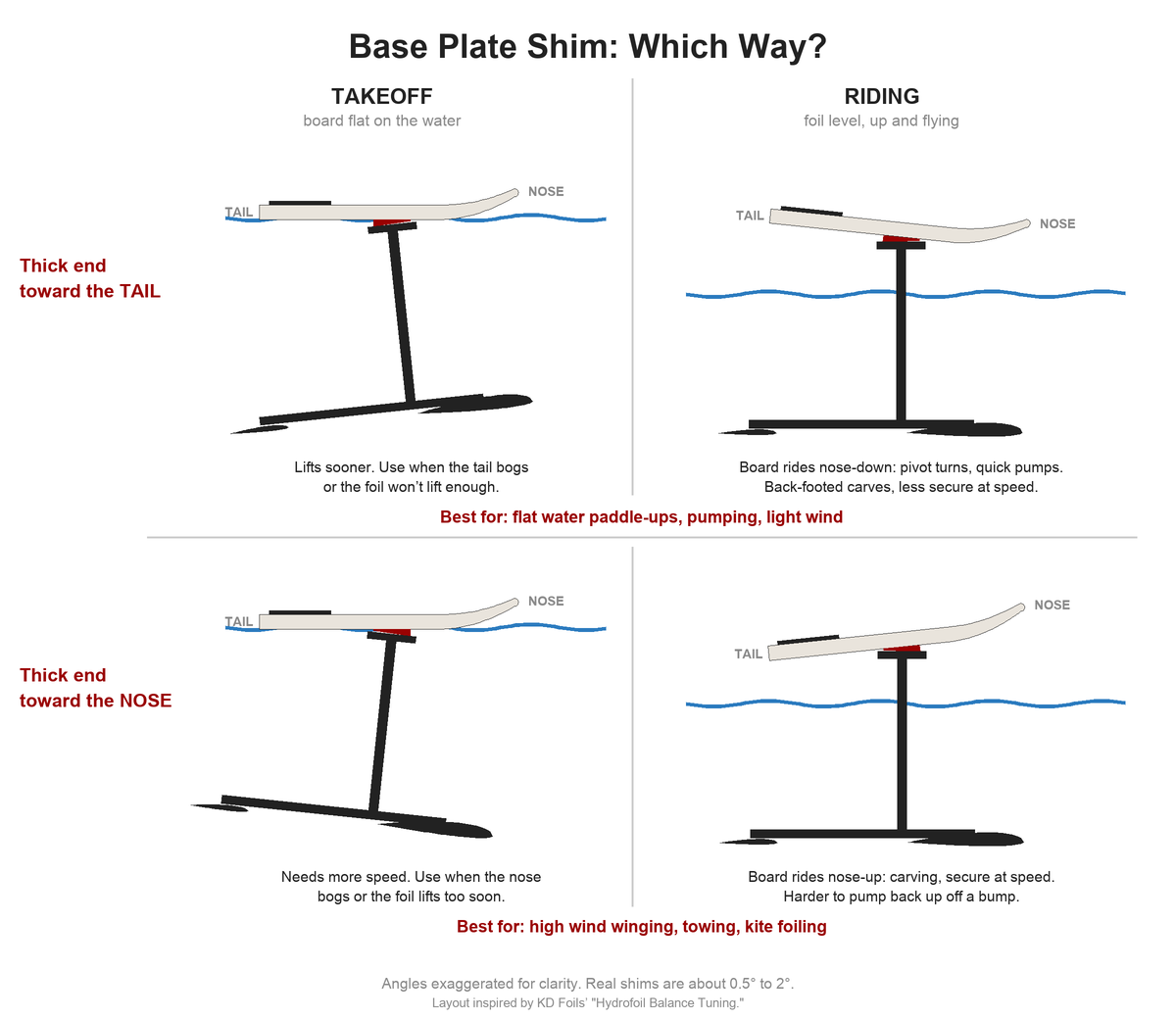
Tip: board rocker matters. A board with a lot of tail rocker already tilts the foil, so two people on the same foil but different boards can feel different. A 1° base plate shim is often the fix.
Tip: the thick end needs longer screws. Armstrong sells its Board Shim with or without the longer hardware for exactly that reason.
Tail Shims: Fine-Tuning Pitch, Speed and Glide
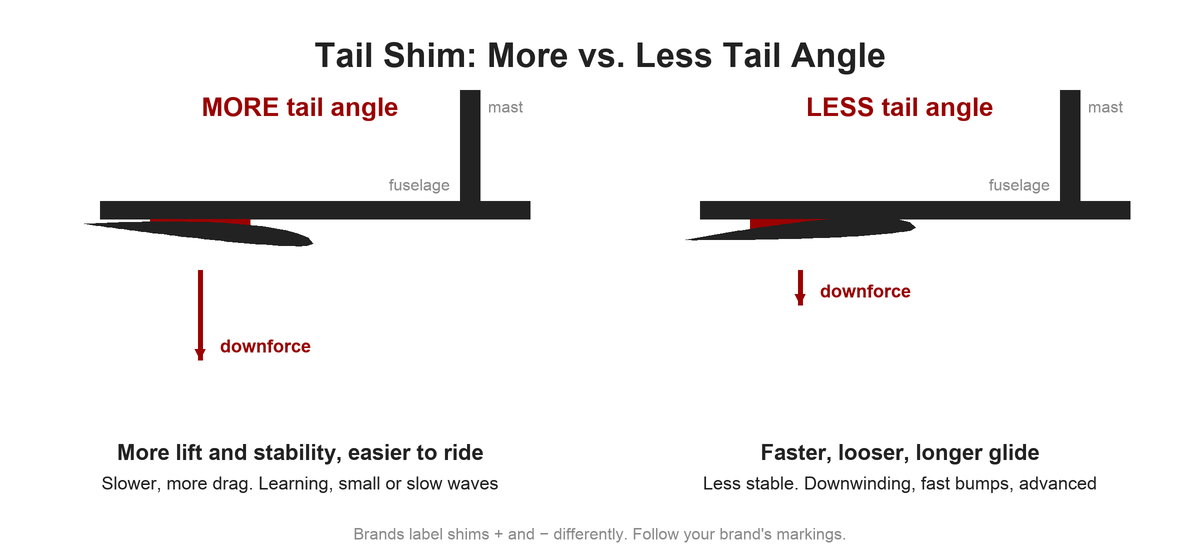
Changing the tail angle changes how hard the tail pushes down.
- More tail angle (more downforce): more lift and pitch stability, an easier, more forgiving ride and more front-foot support. You give up some top speed and glide. Good for learning, small waves and slow conditions.
- Less tail angle (less downforce): less drag, more speed and glide, and a looser, more reactive foil that pumps further. It’s less stable, and you’ll feel more weight on your back foot. Good for downwinding, fast bumps and advanced riders.
Here’s the confusing part: plus and minus don’t mean the same thing across brands
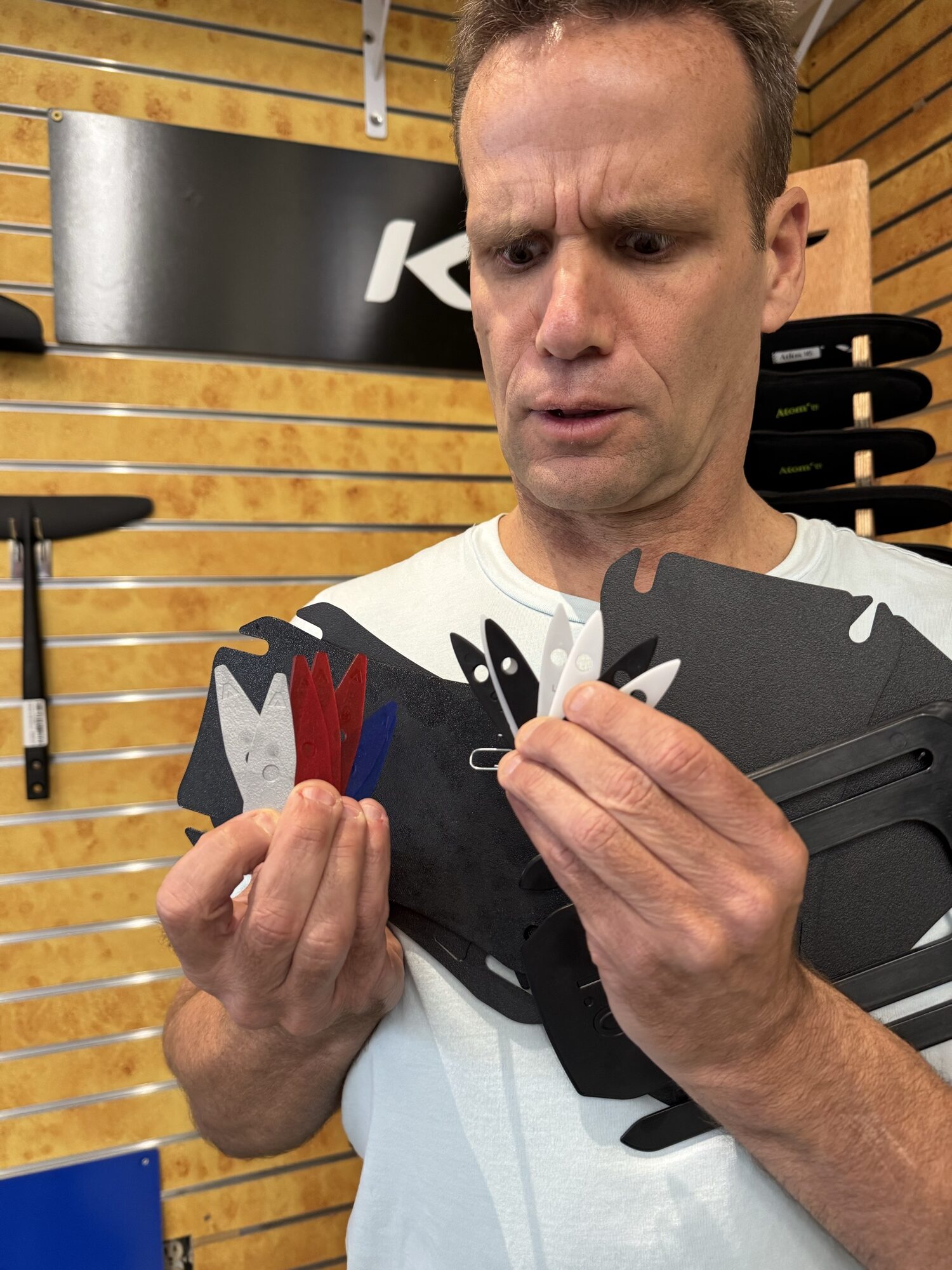
Armstrong’s grey, red and blue Pro Shims in one hand, KT’s black and white shims in the other. No wonder Eddy looks puzzled.
There’s no industry standard for what “+” or “−” means on a tail shim. Depending on the brand, and on whether the tail mounts under or on top of the fuselage, a negative shim can mean more lift or more speed. Some shops’ guides even contradict each other. So don’t go by the sign alone. Go by your brand’s markings and instructions, then judge it by feel.
Rule of thumb: if you flatten the tail (less downforce), you may want to move your mast forward a little in the track to give the front foot more support. A good starting point is about 1 cm forward per degree. Change one thing per session so you know what made the difference.
Brand by Brand
 Armstrong: angle built into the mast
Armstrong builds the angle right into its carbon masts, and it varies by model and length:
| Armstrong mast | Built-in mast angle |
|---|---|
| Carbon MKII (655 / 725 / 795 / 865) | 0° on all sizes |
| Performance MKII and Performance-X, 725 / 795 | 0.5° |
| Performance MKII and Performance-X, 865 / 935 | 1.0° |
The Carbon MKII’s 0° geometry is part of what makes it so stable, controlled and easy to get going. The Performance masts add a little angle, and more on the longer lengths, to suit faster downwind, freestyle and glide riding. The Performance MKII and Performance-X also come with a 0.5° shim in the box.
Armstrong tail shims:
red, blue and grey
This is the one we get asked about the most. With no shim, an Armstrong A+ tail sits at about −1° to the fuselage. That’s the most stable setting Armstrong makes, and it’s where we start almost everyone. Armstrong’s polycarbonate Pro Shims come in three colors: red = 1°, blue = 0.5° and grey = 0.25°. They only go one way: they flatten the tail.
| A+ tail setup | Tail angle (approx.) | How it rides |
|---|---|---|
| No shim | −1° | Most stable, most lift, a little more drag. Start here. |
| 1 grey (0.25°) | −0.75° | The smallest step. Just a hint faster. |
| 1 blue (0.5°) | −0.5° | A touch faster and looser |
| 1 red (1°) | 0° | Faster, longer glide |
| 1 red + 1 blue | +0.5° | Quick and loose, for experienced riders |
| 2 red | +1° | Fastest and least stable. Advanced riders only. |
In Armie Armstrong’s words, the more angle between the front wing and the tail, the more drag and pitch stability you get. Take angle out with shims and the foil gets faster and looser, but less forgiving.
Rule of thumb: for every degree of shim you add, move your mast forward about 1 cm to keep the front foot supported. Change one thing at a time, and give each setting a full session.
At the board end there’s the Armstrong Board Shim in 0.5°, 1° or 2°. Get the “with hardware” version if you need the longer mast top screws for the thick end.
More reading: Tech Talk: A+ System shim use (Tonic Mag, with Armie Armstrong).
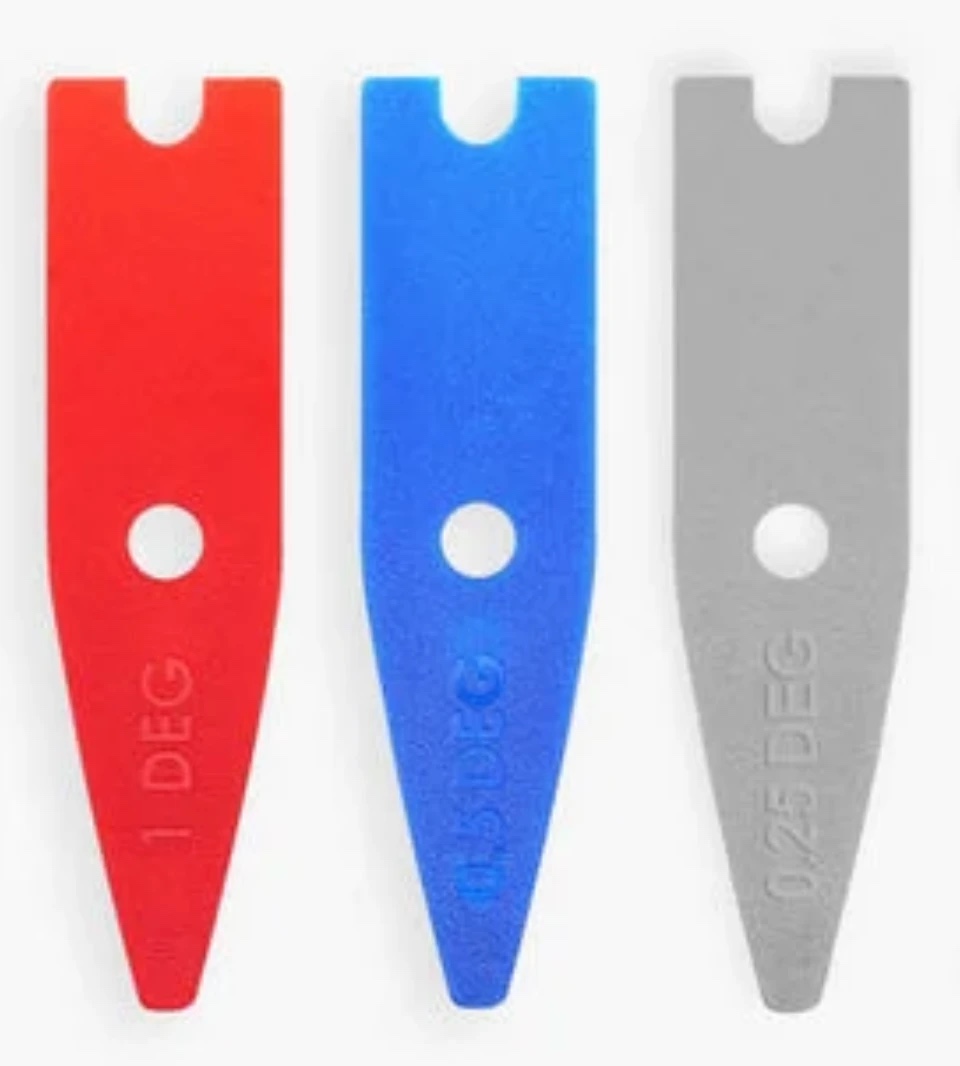
Armstrong Pro Shims: red = 1°, blue = 0.5°, grey = 0.25°. Image: Armstrong Foils.
 KT: add the numbers
KT is the most specific of the bunch, and the tail shim isn’t optional: KT says to always use one. Every KT front wing and mast has a shim value printed on it. Add the two together, and that’s your tail shim.
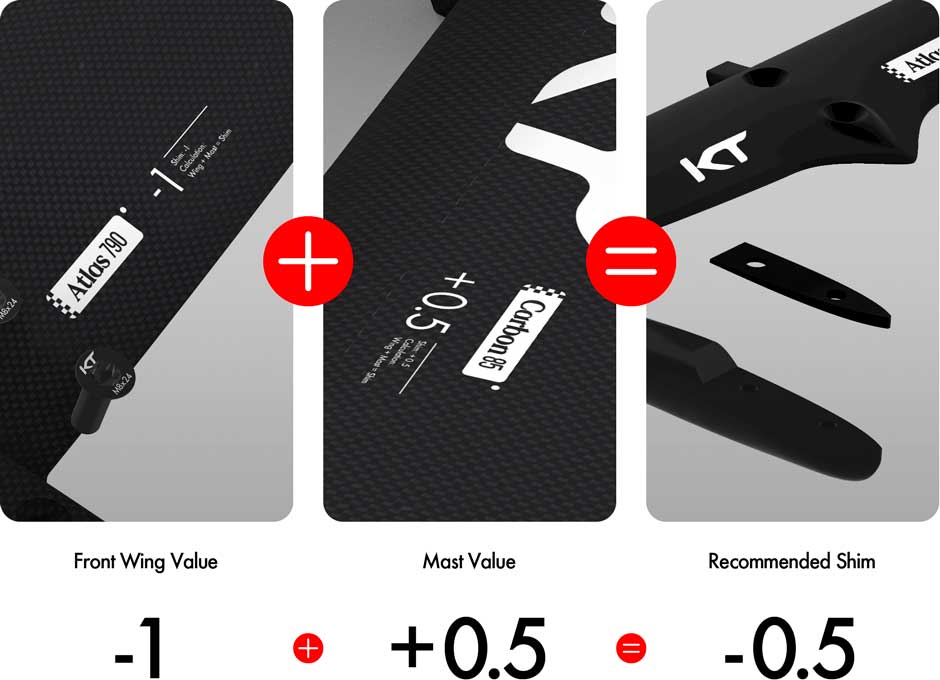
Front wing value + mast value = your tail shim. Image: KT Foiling.
- Atlas 790 (−1) + 85 cm mast (+0.5) = −0.5° shim
- Nomad 980 (0) + 77 cm mast (0) = 0° shim
- Atlas 1130 (+1) + 70 cm mast (−0.5) = +0.5° shim
| Front wing | Value | Mast | Value | |
|---|---|---|---|---|
| Atlas 570 / 680 / 790 / 960 / 1130 / 1340 | −2.5 / −1.5 / −1 / 0 / +1 / +2 | 65 cm | −0.5 | |
| Nomad 700 / 830 / 980 / 1160 | −1.5 / −0.5 / 0 / +1.5 | 70 cm | −0.5 | |
| Instinct 720 / 920 / 1120 / 1300 / 1450 | −2.5 / −0.5 / +1 / +1.5 / +2 | 77 cm | 0 | |
| 85 cm | +0.5 |
Smaller front wings usually land at a negative or zero shim, and bigger wings at zero or positive. Once you’re dialed, KT says advanced riders can go +0.5° for more stability, or −0.5° for more speed and glide. Lost the exact shim? Use the closest one within 0.5°. Riding a non-KT tail? Start with a positive shim and back it off until the foil feels balanced.
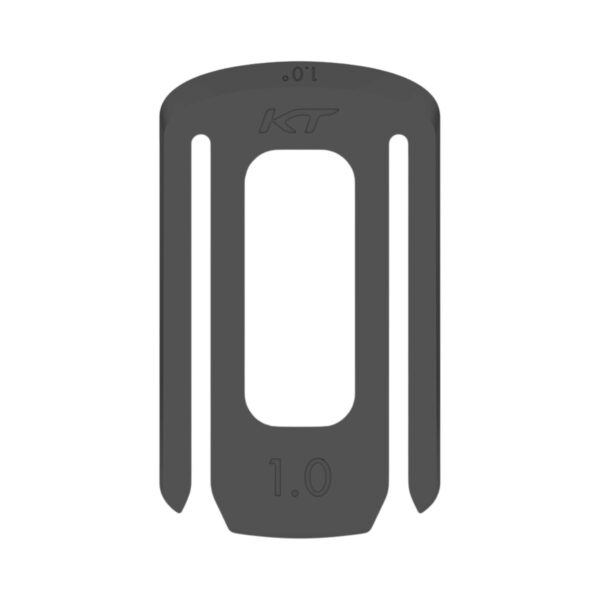
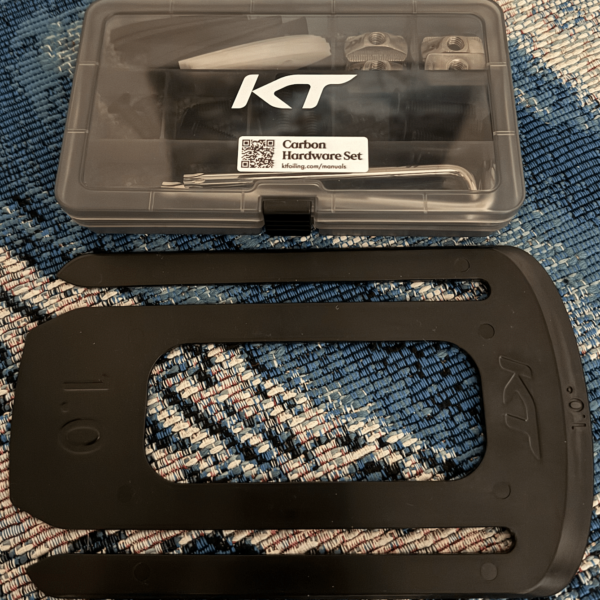
The full KT shim set is 12 shims (white = zero and positive, black = negative). It comes in the KT Carbon Foil Hardware Kit, and KT says to use only KT shims. For the board end there’s the 1° KT Foil Mast Plate Shim. Full chart: KT’s tail shim setup guide.
Newer KT wings like the Solus and Halo aren’t on that chart yet, but the value is printed right on the wing next to “Shim Value.” From the ones in our shop: Halo 800 = −0.5 and Solus 775 = −1.5. So a Halo 800 on a 77 cm mast (0) takes a −0.5° shim, and a Solus 775 on an 85 cm mast (+0.5) takes a −1.0° shim.
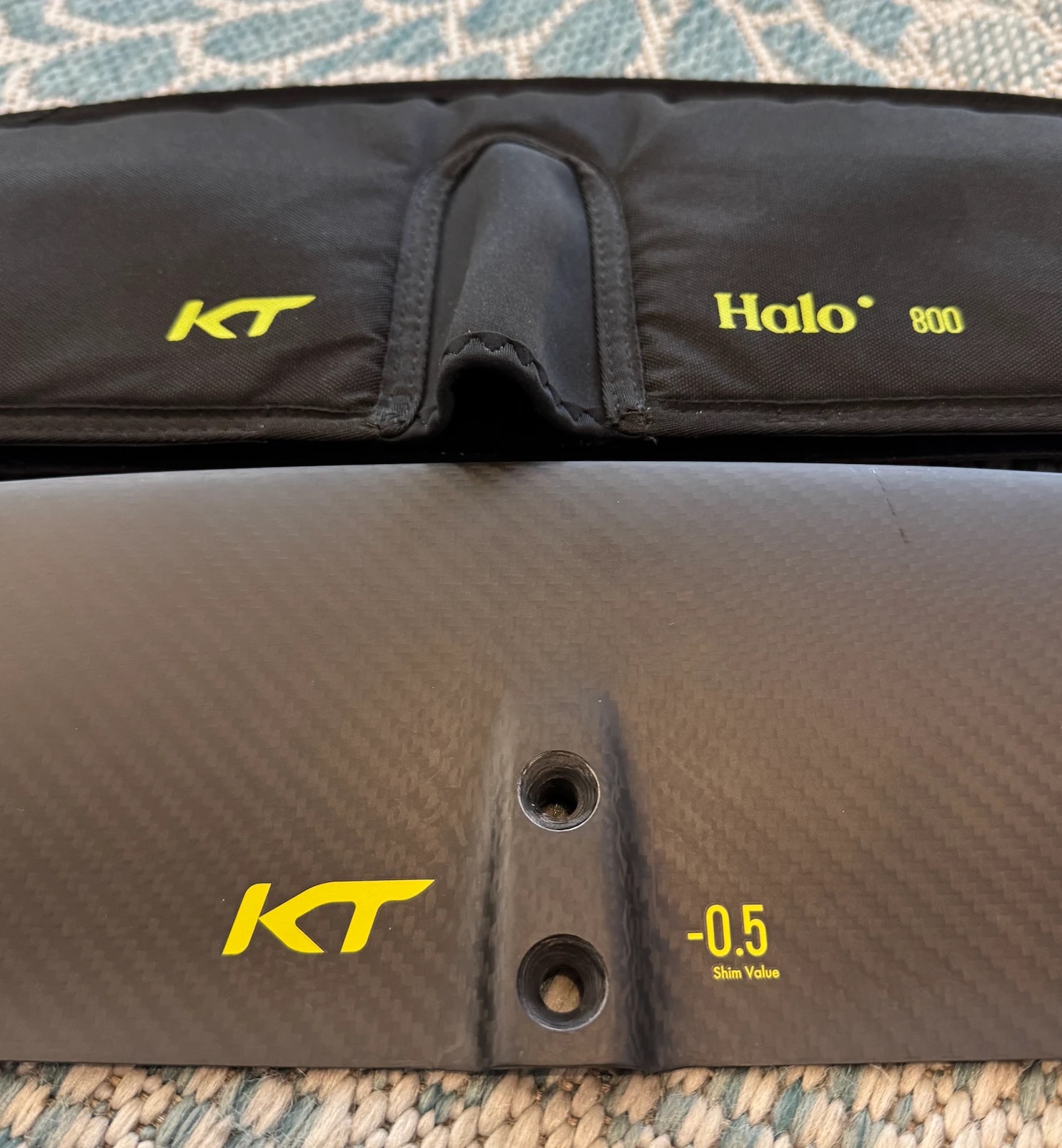
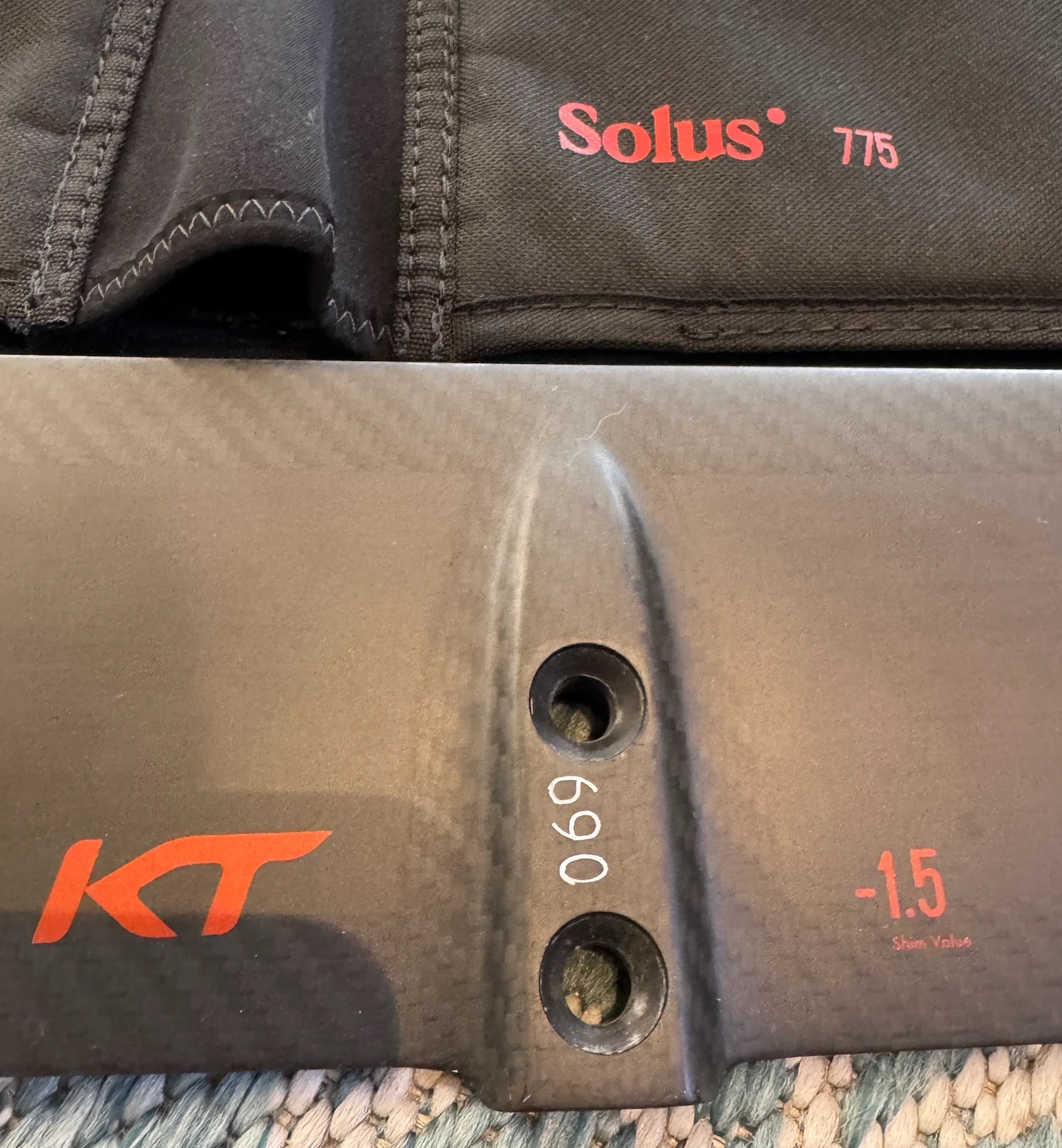
The shim value is printed right on every KT front wing. Halo 800 (left) is −0.5; Solus 775 (right) is −1.5.
 Duotone: depends on the fuselage
Whether you can shim a Duotone foil depends on how the tail attaches.
- D/LAB Monobloc: the tail is built into the fuselage, so there’s nothing to shim. Duotone sets the angle at the factory, and you just bolt it up and ride.
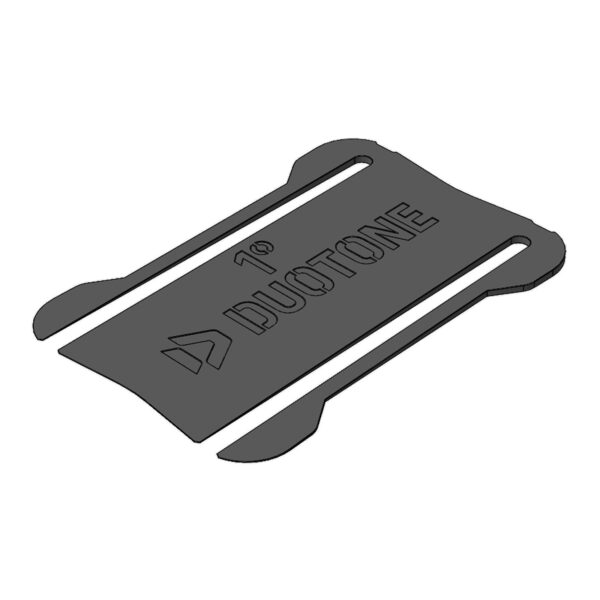
- SLS and aluminum fuselages (and fuselage adapters) with a separate bolt-on tail: these can be shimmed. Duotone’s Foil Tail Shims Set comes with four shims, +0.3°, +0.6°, −0.3° and −0.6° (SS24 onward). Each one is marked with its angle and an arrow showing which way it faces.
Duotone keeps the steps small. Positive shims steepen the tail for more lift and front-foot support. Negative shims flatten it to cut drag and add glide, and Duotone suggests those for more experienced riders. For the board end there’s the 1° Duotone Foil Plate Shim. More from Duotone: What do shims do, and how do I use them?
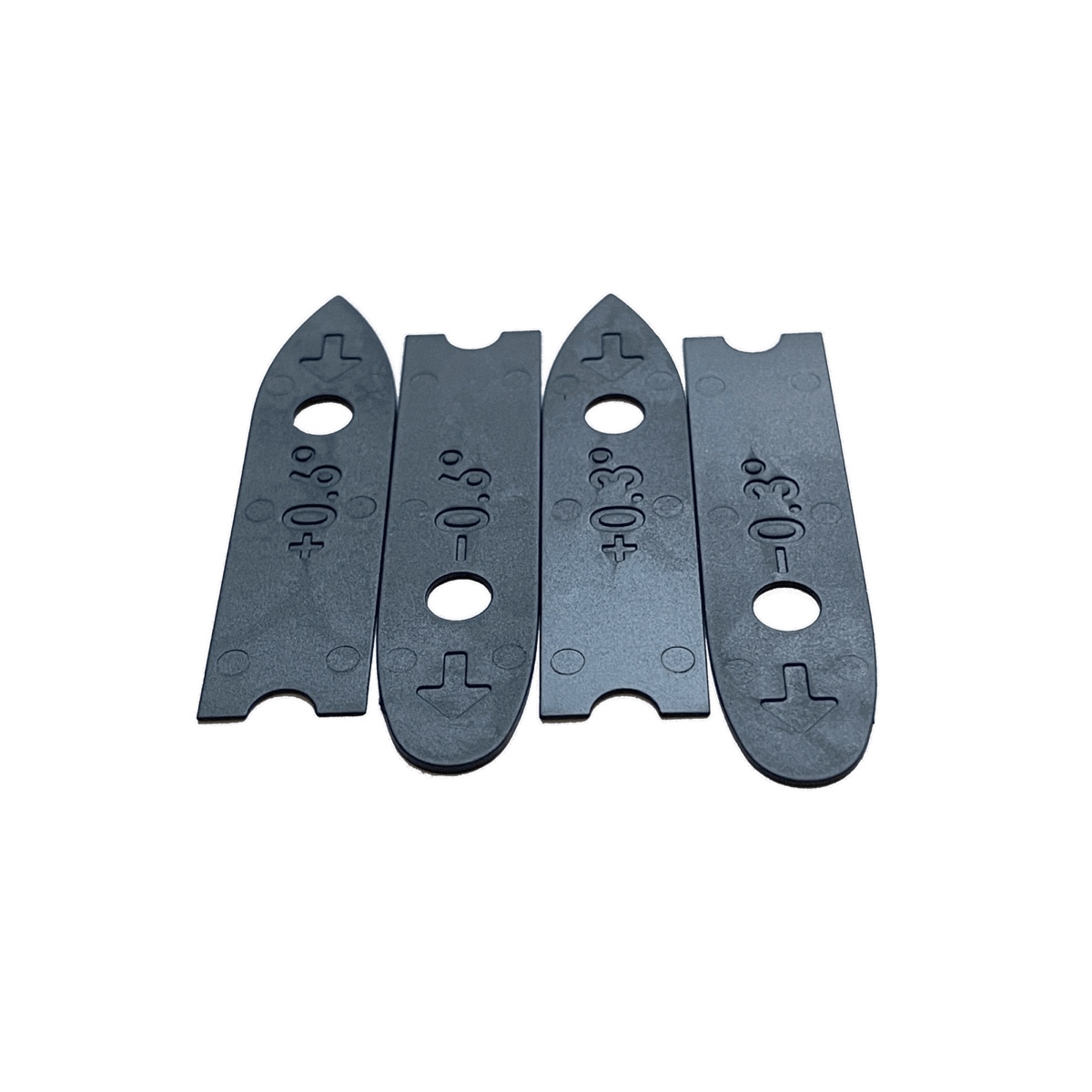
Duotone Foil Tail Shims Set: +0.3°, +0.6°, −0.3° and −0.6°. Image: Duotone.
Quick Fixes: What You Feel, What to Try
| What you feel | Try |
|---|---|
| Hard to get up, foil feels sticky or slow to lift | Base plate shim with the thick end toward the tail, or more tail angle |
| Foil wants to climb or breach, too much front-foot pressure | Base plate shim with the thick end toward the nose, or less tail angle |
| Slow and draggy once you’re up | Less tail angle |
| Twitchy and hard to keep level | More tail angle |
| Back leg burning | More tail angle, or move the mast back a little |
| Front leg burning | Less tail angle, or move the mast forward a little |
Before You Shim
- Start from the factory setup and ride it a few sessions first.
- Check mast position first. Sliding the mast in the track is the easiest adjustment, and it often solves what feels like a shim problem.
- Change one thing at a time, and write down what you changed.
- Tighten everything to spec and check that the shim sits flat. A shim that isn’t seated properly causes more problems than it solves.
- Still not sure? Bring it by the shop. We’ll look at your setup with you.
T.J. Gulizia is a co-owner of Big Winds in Hood River, Oregon. Come by 207 Front Street or call 541-386-6086.
T.J. Gulizia is a co-owner of Big Winds in Hood River, Oregon. Come by 207 Front Street or call 541-386-6086.
Get Yours Here!
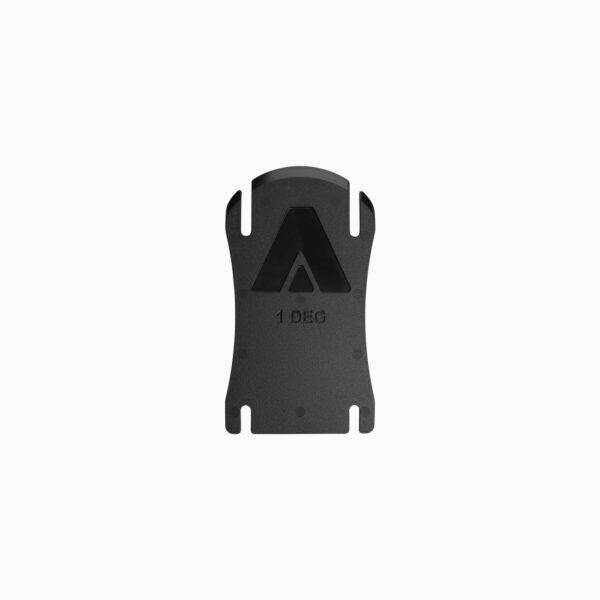
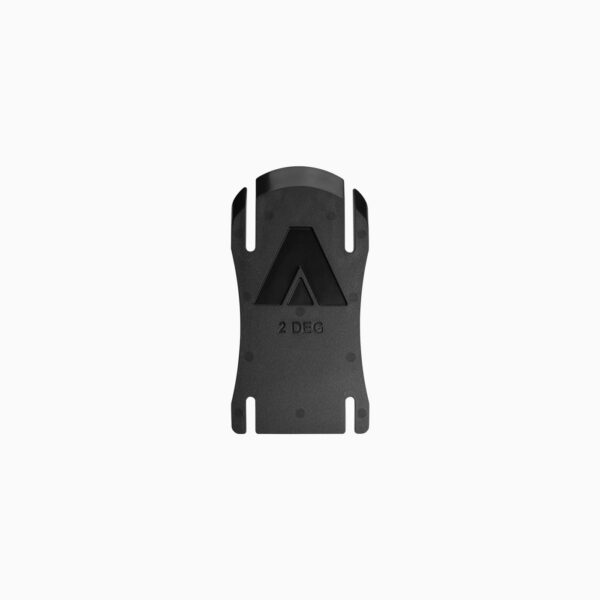
Armstrong Board Shim
The Armstrong Board Shim is the quickest way to change the feel of your foil without changing a single wing.
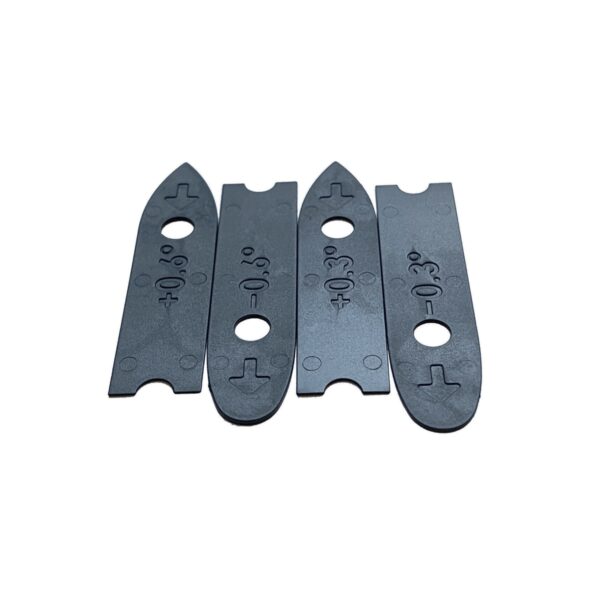
Duotone Foil Tail Shims Set +0.3° +0.6° -0.3° -0.6° (4pcs)